でらゲー

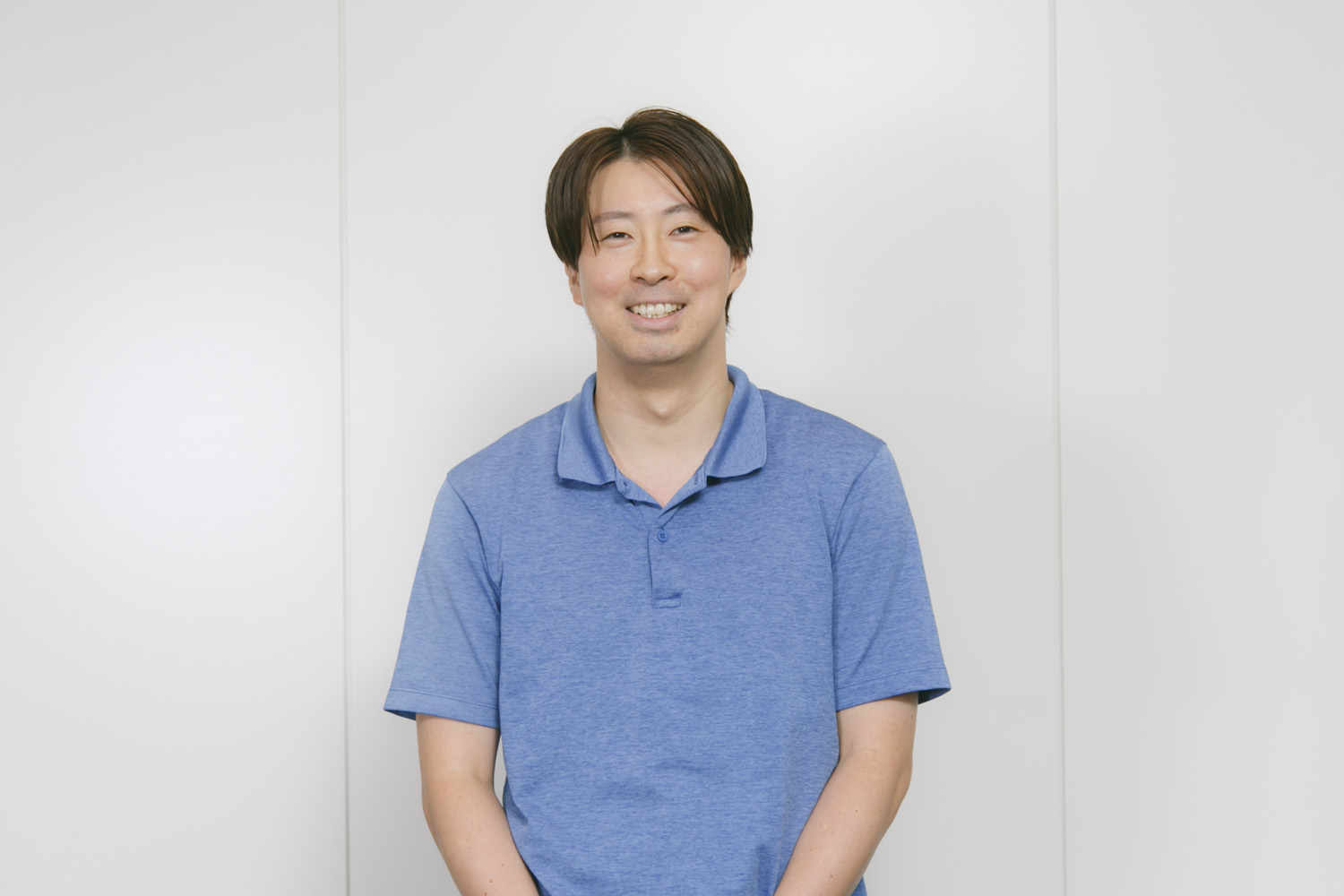
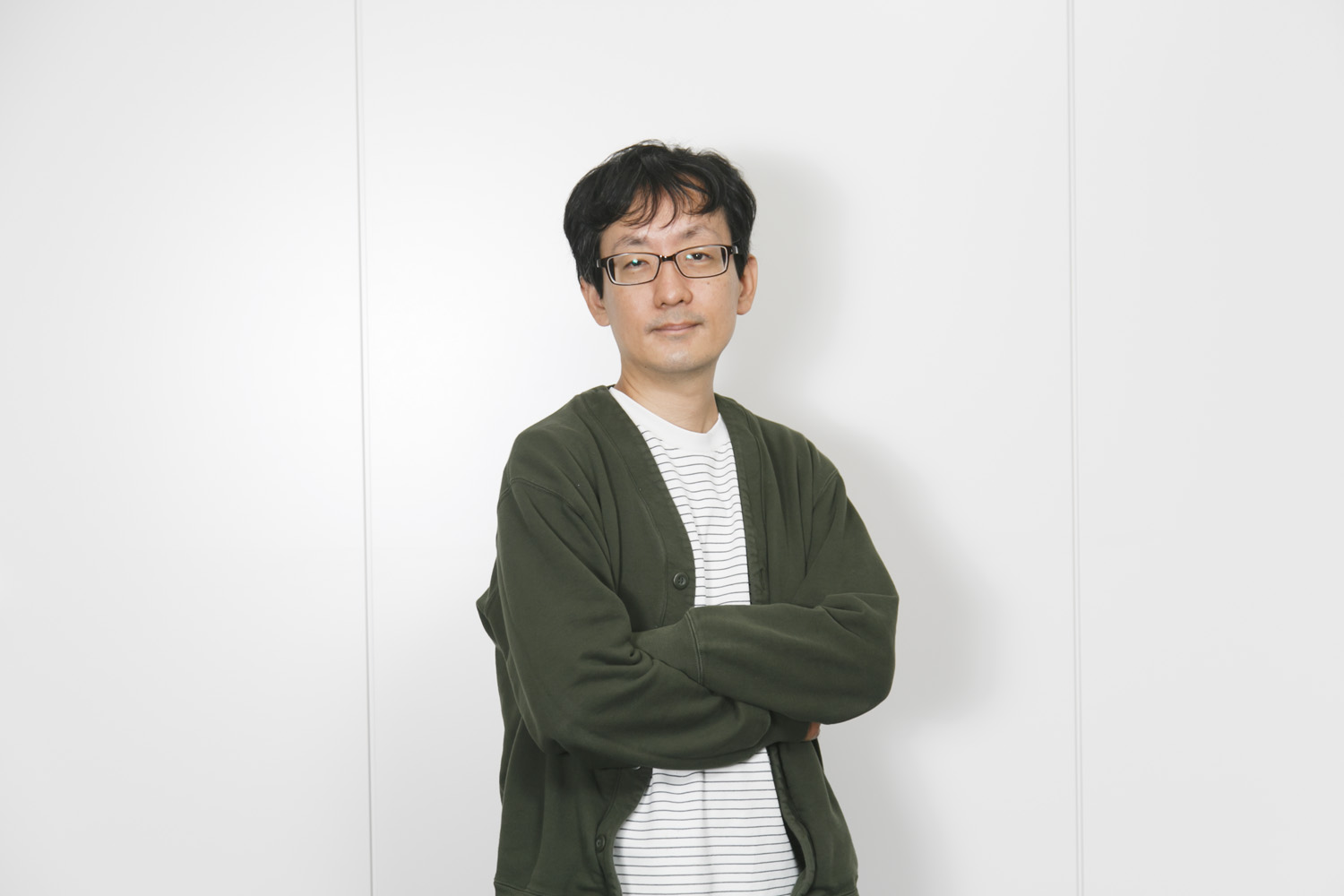
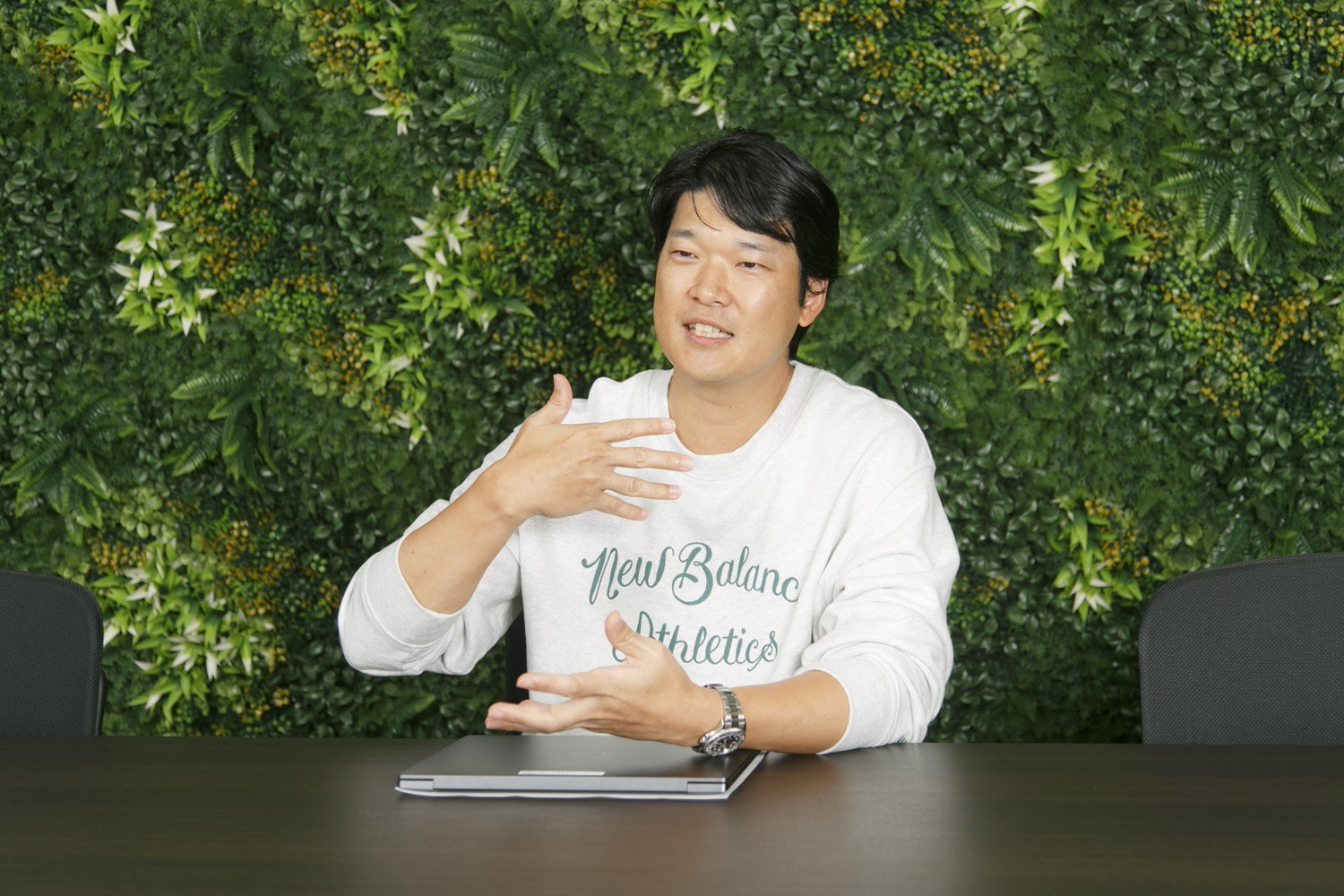
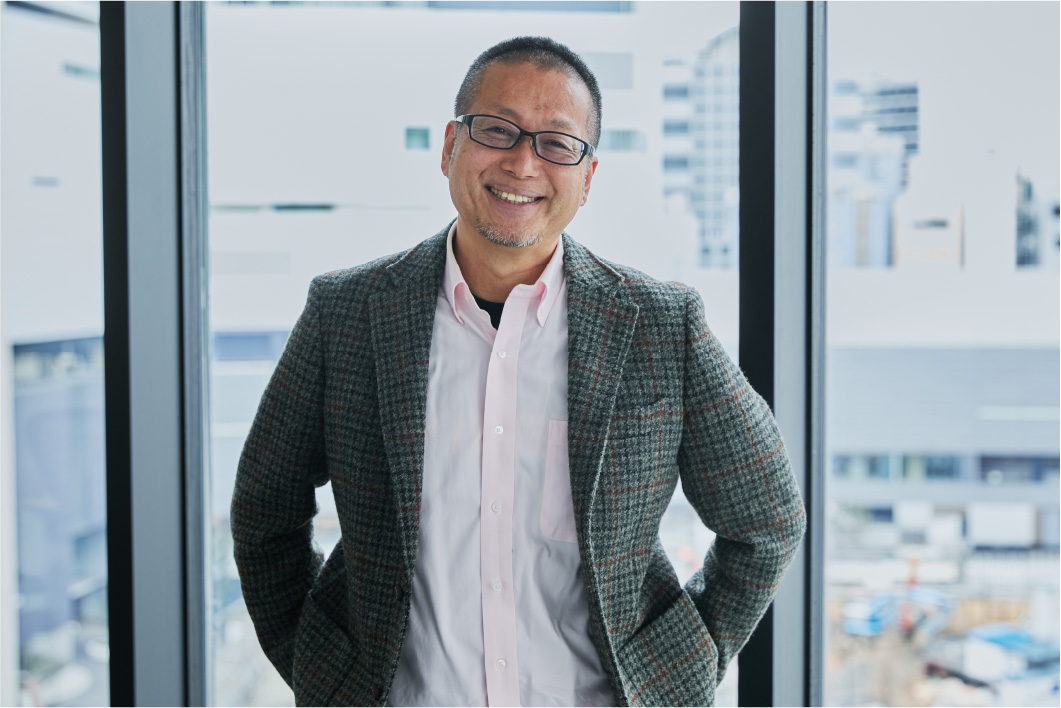
Yoshiki Okamoto (Game Producer)

Born in Ehime prefecture in 1961, Yoshiki Okamoto is a game producer who helped launch an unprecedented fighting game boom in the early 1990s with Street Fighter II. In his subsequent work, he established his status as a top game creator through his involvement in generating major hit titles in the Resident Evil, Onimusha: Warlords and Monster Hunter series. In the field of smartphone game apps, he was involved in the development of Monster Strike, released by MIXI, Inc. in October 2013, which grew to become a top AppStore and GooglePlay seller on the domestic market by 2014. Okamoto has since expanded the game markets for which he creates content beyond Japan to other countries in Asia and other regions as a whole. He demonstrates an eagerness to take on the challenge of diverse genres in his pursuit of further success.


In work, and in games,
a playful spirit deserves some leeway

It’s intuitive, so you can enjoy it no matter how many times—
That’s the kind of game I want to play and to make

At Deluxe Games, keywords like “interesting” and “fun” are often seen in our company messaging. So, what do these words mean in the first place? Since Deluxe is a company involved in game development, for us it comes down to the question of what an interesting game is. What kind of thing is it?

The truth is, it’s a matter of endless diversity. I think each person has their own definition of an interesting game. For me, an interesting game is one that is fun to play over and over again. It is natural for a game to be interesting the first time around, but I think it’s crucial to create a design that keeps the fun and enjoyment fresh no matter how many times it is repeated. And, ideally, there should be no tutorials. “Intuitive” is another way to say it. Even without getting information beforehand, you find that you can do it if you just kind of wing it, put your hands on it and try it out. A game like this can reach a wider range of users because it’s one that can be played worldwide.

“Playful spirit” is a term we often use at Deluxe Games. You have to make room for a playful spirit. To play with everything you’ve got, it’s no good to be too tense about it, and this is true with games as well. Games in which you have to complete a task, or you can’t make it through are like puzzles. I think it makes things more interesting if users can think up their own approaches to playing, like whether to pay, to spend time on it, or to brush up their technique. Many pathways are available.

The game industry is still in a transition period. At one time, the market consisted almost entirely of stationary game consoles, but the evolution of PCs and the emergence of smartphones has led to a diversification of devices. The game platforms are changing in a variety of ways, and revenue options have proliferated into outright purchase, pay-as-you-go, and subscription models, plunging the market into a period of competitive turmoil. Amid this situation, I want Deluxe Games to be as flexible as possible. In order to continue producing games that we find interesting, I want us to keep from limiting our scope of activities, and from missing out on the full range of possibilities by thinking too rigidly.
Monster Strike was like a home run for me,
but I also have a love for software created by overcoming struggles

I have been involved in a number of productions at Deluxe Games, but I’d say the most memorable would be Monster Strike and Kingdom Ran: The Road to Unification. Monster Strike has been one of the best games in my career history. It was like a home run for me. It’s been put on overseas markets and has sold better than I had expected. Kingdom Ran, meanwhile, was a hard slog. The fact is that Kingdom Ran is my favorite manga of all time, and I was more passionate about making it into a game than anyone else. But it was difficult to reconcile the ideas. And yet, making the game while overcoming those struggles was fun. As a game developer, I was excited by the desire to create something interesting, something that would provide surprise and joy to the fans of the original work by deftly negotiating the path between what can and cannot be done.

No matter what field you’re in,
the harder you work, the more experience you gain

In doing the work, what benefitted us most was the experience of finding ways to see it through when things weren’t working out well. That experience stays with the company and with the individual. Even if they leave and go to a different company, they will be recognized as someone who has worked hard to get to this point, and their technical skills have become more competent as well through those experiences. It’s the same in any profession: the more you struggle, the more experience you gain and the better you become at doing everything.

Personally, it makes me very happy that so many of our current staff are superb professionals whose thinking easily surpasses my own. I look at these people with their talent and stoicism, their whole-life devotion to making games, and I’m humbled. At times like that, I feel indescribably wonderful.
If you have just one quality that’s yours and yours alone,
then I want to work with you

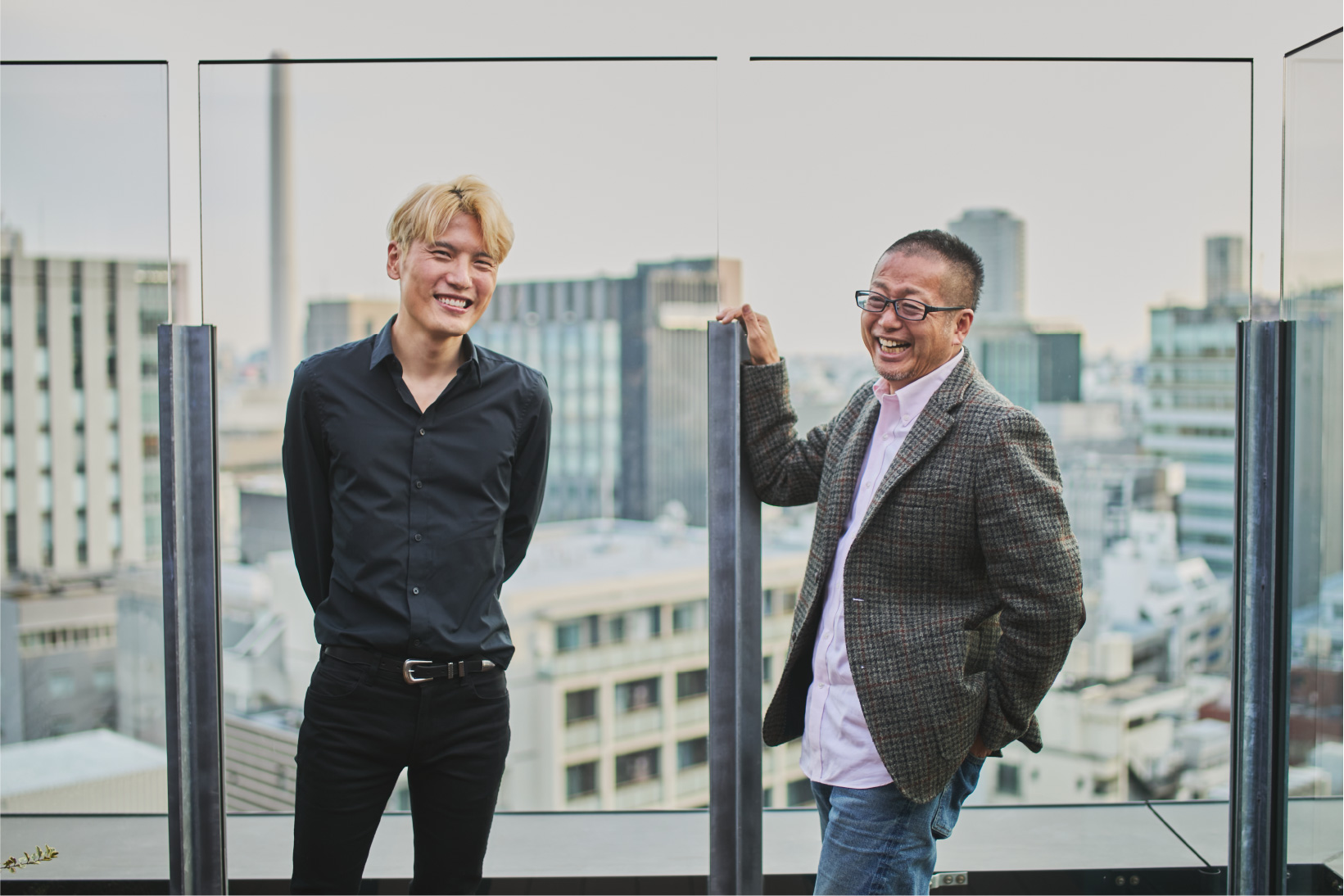
We have two types of people at Deluxe Games. There are those who want to make games because they love them, and those with the ambition of creating a hit. And some of them may have both qualities. Creating a hit game takes a lot of studies, and I like people who have that kind of forward-thinking mindset.

There’s only one more thing I need. I want to work with people who are better than me. In expressing your own strengths, I want you to be able to say, “This is one area where no one can touch me.” It can be an area where you’re having difficulties now, but in which you’ll grow in the future. You don’t need an official title that says, like, “The Winner.” You might just excel at drawing, at programming, or at physics engine work. It’s OK to limit the frame in that way. If you have some area in which you excel, it shows that you have the high level of motivation it takes to get there. And if you are aware of your strengths, you can rest assured that there’s a place for you in this company. I’m still eager to learn, and until the day I retire, I consider this a learning experience. There may be times when we think we have done it all, but tomorrow will always bring new changes as the world around us evolves. I hope we can inspire each other to constantly outdo ourselves and set new personal records.
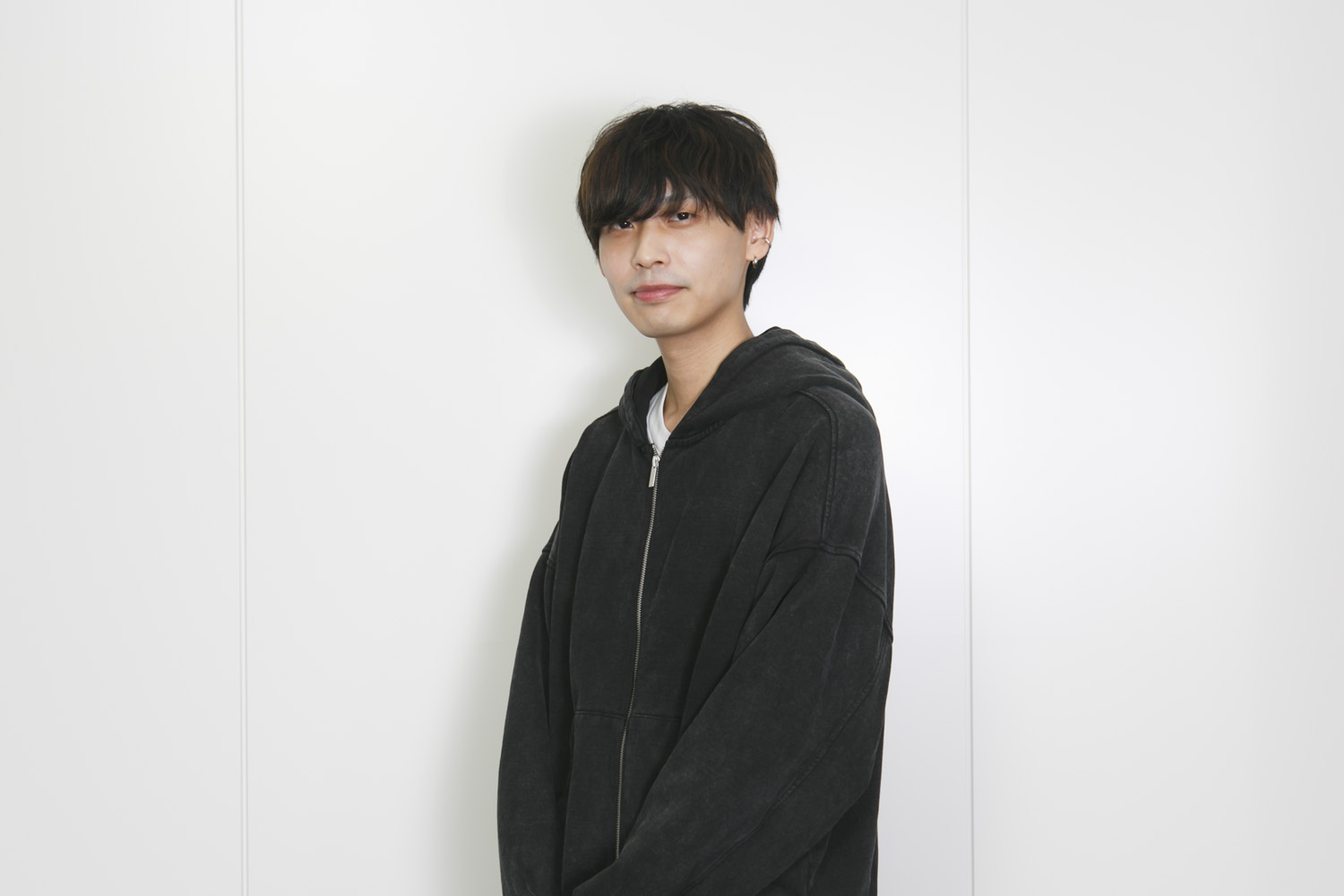
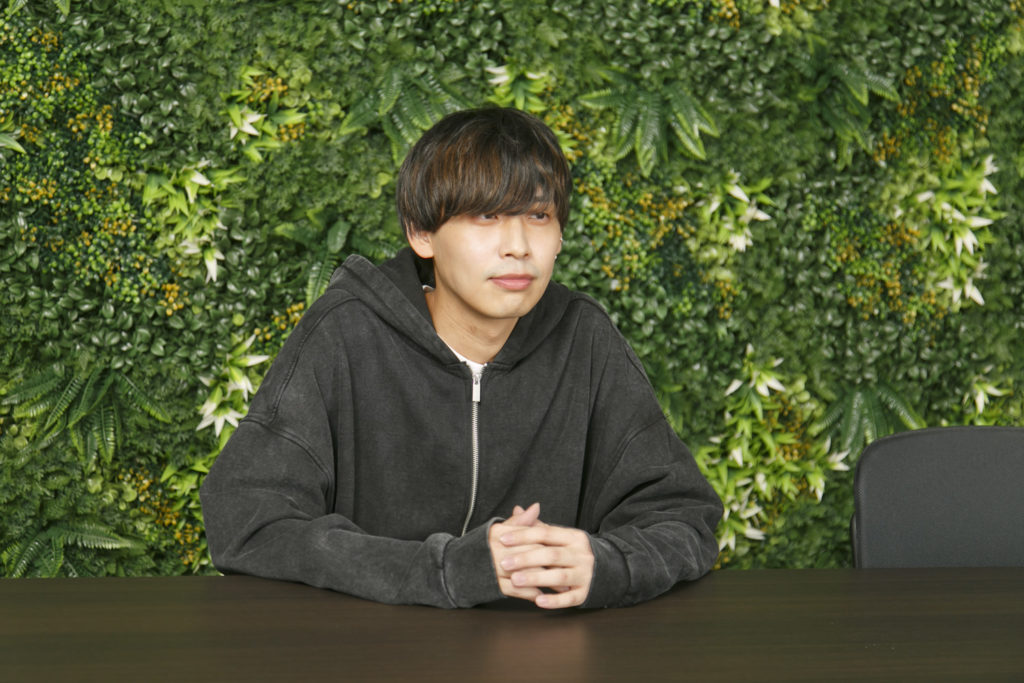
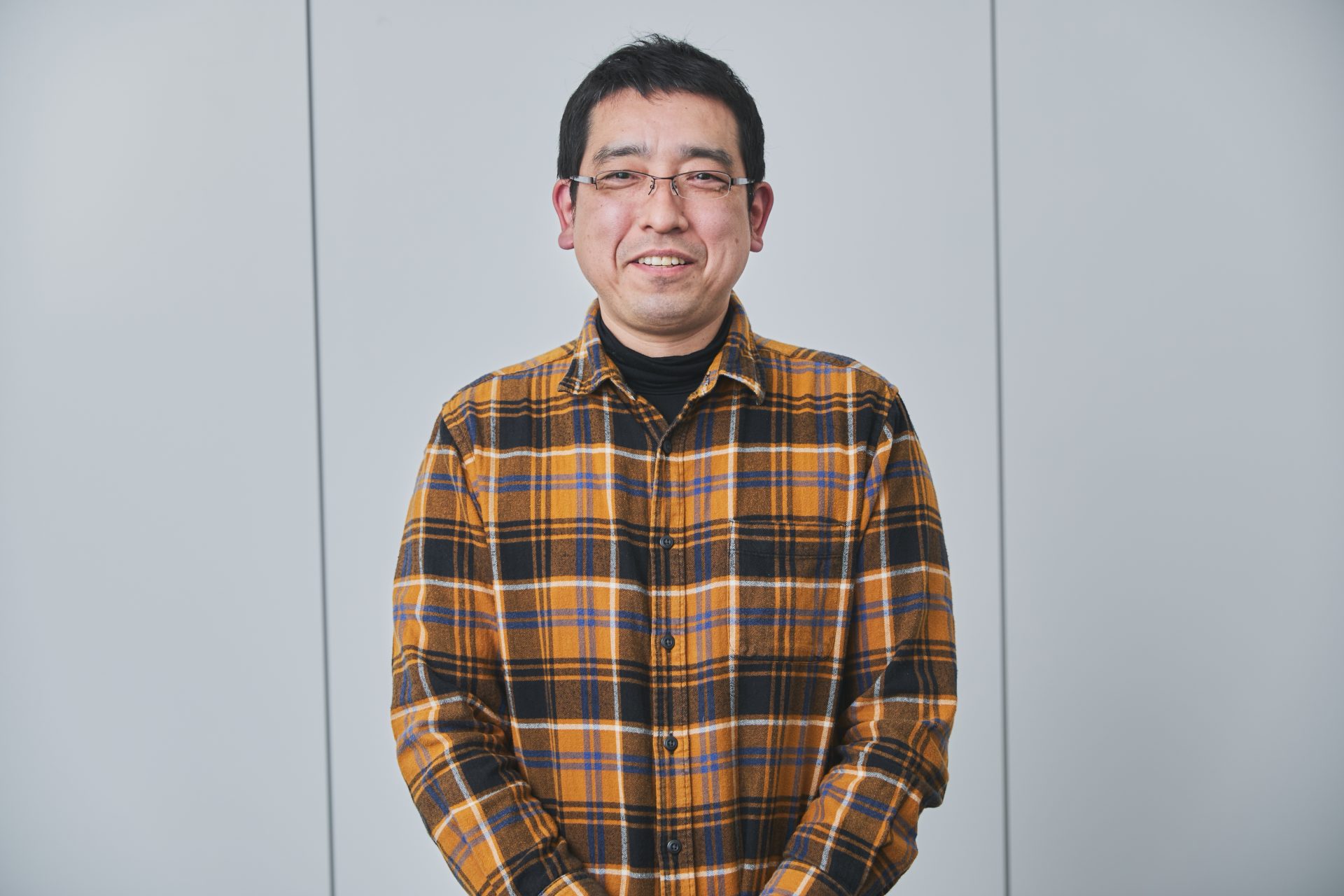
Kokubo Ryosuke(Mid Game Designer &Team Leader)

Teamplay at Core of Game Dev
Teams to Craft Stages for All

Teamplay Vital to Game Dev

Collab With Other Depts to Boost Fun


After working at a mobile game development company for about three and a half years, I joined Deluxe Games as a mid-career hire in September 2023. Although I initially started on a one-year contract, I am grateful that my performance was recognized, leading to my transition to a full-time permanent position ahead of schedule, even before my contract term ended.


Currently, I work as a game designer, focusing on stage creation for Monster Strike. My work begins with developing the initial concept—deciding what kind of stage it should be. We brainstorm ideas in meetings to solidify a plan that ensures users will have an enjoyable experience. Once the plan is set, I move on to configuring the data based on that concept, including enemy HP, attack patterns, and their placement within the stage.


Stage creation is not a solo effort. If it were, the final product would end up reflecting the personal preferences and habits of the creator. To avoid this, even after a concept is decided, I frequently show my work-in-progress to colleagues and seniors to get their advice. There is also a dedicated department that checks for balance and quality. They review the stages from a user’s perspective, offering bird’s-eye view feedback like, “This attack feels unfair,” or “This placement should be changed.” Sometimes I receive insights that I would never have noticed on my own during the creation process. It’s in these moments that I truly feel the strength of developing as a team.


When it comes to my work, I make a conscious effort to stay mindful of the fact that we are “creating as a team.” A large-scale title like Monster Strike involves a vast number of people. If stage production falls behind, it creates a ripple effect that impacts other departments; conversely, completing my work ahead of schedule allows the entire project to proceed smoothly.


Because I value this mindset, I make a point of staying interested in and checking topics that aren’t directly related to my own tasks. A good example would be the discussions that pop up on our team communication tools. Even if they don’t involve me directly, taking a quick look allows me to keep track of what my colleagues are currently working on. Plus, there is always a chance that a topic seemingly irrelevant now could involve me down the line. When you’re developing a game as a team, after all, there’s no such thing as a conversation that is completely irrelevant.


Multi-function, Clarity at Opposite Ends

Coexistence to Show Designer’s Skill


Another thing I keep in mind is to avoid creating anything that leaves players feeling lost or confused. Since Monster Strike is a long-running title now in its 12th year, it has accumulated a vast array of features, which naturally leads to complexity. While having many features means providing a richer experience—something long-time fans welcome—it can also make the game feel daunting to beginners.

High functionality and clarity are often at opposite ends of the spectrum. I believe that finding creative ways to make these two coexist is where a game designer truly shows their skill. As we strive to create a game that everyone can enjoy, I feel there is still plenty of room for improvement.


I find my work most rewarding when a stage I’ve created is released and I get to see the players’ reactions. Because Monster Strike has such a massive player base, every new stage release sparks a lot of excitement on social media. Reading their comments makes me incredibly happy and serves as a great source of motivation for my work.


Deluxe Games Promotes Open Culture

Challenges Beyond Specialty Welcomed


I feel that Deluxe Games is a company where employees’ voices easily reach management and decision-making happens incredibly fast. For example, when my team suggested improvements for our regular all-hands online meetings, those ideas were implemented almost immediately. It was a moment that truly made me feel the openness of our culture. I also appreciate that the evaluation criteria are clear, and I feel that my individual contributions are being recognized fairly.


Furthermore, it’s a company where it is easy to turn ideas you want to challenge into actual projects. While my primary focus is currently stage creation, at my previous company, I gained experience in a variety of roles, such as proposing new features and managing collaboration projects. At Deluxe Games, I hope to broaden my horizons by taking on planning and proposals beyond just stage creation.
The company never tells you to “stick to your specialty”; in fact, they genuinely welcome that kind of initiative. Since I’m also an avid gamer in my private life, I have a long-term dream of developing not only mobile games but also multi-platform titles.


I believe Deluxe Games is an ideal workplace for those who can act while staying mindful of their surroundings—people who don’t just wait for instructions but are proactive about taking on tasks themselves. For those who have their own vision and can take the initiative, opportunities will always come their way. Perhaps it’s because so many people here are naturally observant and attentive to others that this culture has taken root.

TAMURA Ryozo(Level Designer)

Offline Meetups Deepen Bonds
Deluxe Games Unique Events Link Global Dev Teams

The job involves everything related to quest development.


I am a level designer for Kingdom Ran: The Road to Unification, where I am responsible for quest creation. Kingdom Ran is a joint project between Deluxe Games and its Malaysian subsidiary, Deluxe Games Malaysia. It is being developed by a very large team that includes not only our internal staff but also numerous external partners.


To briefly explain my role: I start by developing a concept, where I determine the strength and movement of enemies to be placed on the map, as well as the positioning of obstacles like fences and pitfalls. Once the concept passes the internal team review, I move on to the actual data configuration to build the quest. For map objects such as cliffs and forests, our designers handle the aesthetic placement to ensure everything looks polished. Additionally, I am responsible for drafting specifications for new quest-related features.


There are several types of quests in Kingdom Ran. These include Normal Quests, where players follow the story as it unfolds in the original manga; Event Quests, which feature original elements unique to the game; and competitive modes such as “Conqueror of Great Merit” (Japanese: Taiko no Hasha) and “Alliance Raid Battle” (Japanese: Doumei Toubatsusen), where players can compete for high scores or enjoy cooperative play with their alliance members.


Benefit Trips, Childcare Leave
Rich Benefits Define Deluxe Games Culture


Deluxe Games is a company where a wide variety of people come together; my impression is that it truly embodies the concept of “different strokes for different folks.” With such a diverse range of ages and career backgrounds, I believe this diversity has become one of the company’s core strengths.


I also think the frequent benefit trips are a unique feature of Deluxe Games. Although I haven’t been able to join every single one, the company plans about two to three trips a year. For example, this year’s schedule included Bali in February, Universal Studios Japan in April, and Sapporo in July.


The highlight of all the benefit trips I’ve taken so far was getting to bond with the Kingdom Ran development team from Malaysia. Since we are usually separated by distance, our communication was almost entirely online. However, being able to go sightseeing and grab drinks together during the trip allowed us to deepen our friendship through face-to-face interaction. It wasn’t just a fun experience; it also had a positive impact on our professional collaboration. I’m truly glad I participated.


For the end of this year, a three-day, two-night trip to Atami over the weekend is also being planned. Since the duration is a bit shorter, it makes it easier for people in busier departments to join. What’s more, we’re allowed to bring guests, so some employees enjoy the trip with their families. I hope to continue participating in these company trips as much as possible to keep nurturing those cross-departmental connections.


Another aspect of our benefits that I’d like to mention is childcare leave. When my first child was born this year, I was able to take three months of leave exactly as I had hoped. Since it was a long-term absence, it required thorough coordination and a proper handoff of my responsibilities, but thanks to that, I was able to focus entirely on parenting during my time off.
Raising a newborn was certainly a challenge, but those three months of childcare leave became an irreplaceable experience where my spouse and I could work together and share the joys of parenthood. I am truly grateful for a workplace environment that allows for such extended leave.


Deluxe Games Seeks Cooperative Staff

With Clear Passions


I believe that someone suited for Deluxe Games is, quite naturally, someone who possesses a strong sense of cooperation. For instance, my team working on Kingdom Ran in Tokyo holds a regular lunch gathering to coincide with our monthly app updates. About 40 members who are in the office that day get together to recharge over delivered pizza or takeout. I think the reason these lunches have continued for so long is that so many of our staff value the kind of teamwork and cooperation that makes game development run smoothly.


Another thing is that many people at Deluxe Games have a very clear sense of what they love. There is something truly magnetic about someone who can say, “This is what I’m passionate about!” And if you can put that passion into words, it’s even more compelling.
That “something” doesn’t have to be games; it can be anything. Everyone has their own unique interests, and you never know exactly how those will eventually become your strength. Just as the love for the original Kingdom manga and anime was the starting point for the Kingdom Ran project, I believe Deluxe Games is a company where you can turn your “passions” into a driving force.

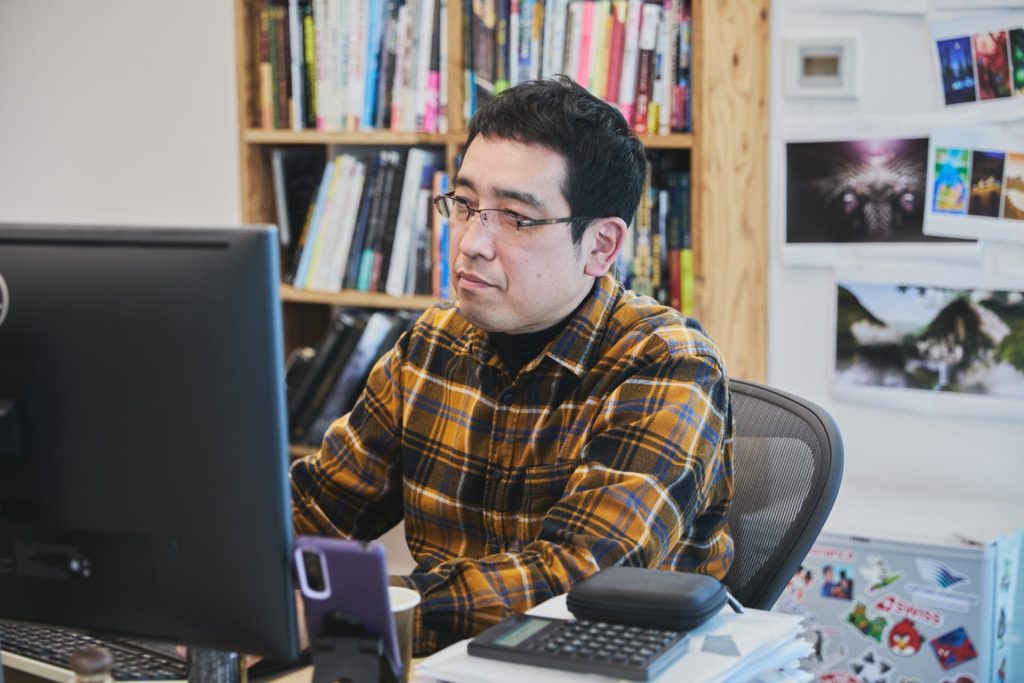
Furuya Mutsuhiro(Lead Engineer & Team Leader)

Beyond the Specs:
A Client Engineer’s Challenge to Create Features Embraced by All

The Key Skill for Client Engineers: Communication Over Coding


I joined Deluxe Games as a mid-career hire back in 2014, shortly after the release of Monster Strike, following my time at a consumer game development company working on titles for PS3 and Xbox 360. Since then, I’ve been consistently involved in the development of Monster Strike as an engineer. My primary responsibility is the client-side programming—the actual game application that runs on the smartphone. Although it’s a small group, I’ve also been entrusted with the role of team leader.


The work of a client engineer isn’t just about being glued to a computer screen all day. Communication skills are just as essential as programming expertise. This is because the core of our job is to take the ideas conceived by game designers and transform them into a playable reality.


It’s not uncommon for a game designer’s idea to be just a core concept, without the fine details or rules fleshed out. Sometimes, we even receive vague requests like, “Just make it feel right.” This is where communication skills become critical. As client engineers, we talk through these ideas with the designers to unravel the true intent behind that “feeling.” We then figure out how to transform the concept into a functional game mechanic while ensuring it’s actually fun to play.


Even if an idea is technically impossible to implement as-is, we don’t just dismiss it with a “we can’t do that.” Instead, it’s crucial for the whole team to brainstorm ways to realize the “fun” the designer envisions—for example, by suggesting an alternative approach like, “We can’t do it that way, but what if we tried this?” The reality of game development is a constant back-and-forth with the designers. After all, our ultimate goal isn’t just to “write code according to the specs,” but to “create a game that’s truly fun to play.”


User Feedback Fuels Work
All Opinions Spark Improvements


I find my work truly rewarding when the game we’ve worked so hard on brings joy to our users. Especially when a new feature I’ve personally handled is released, I can’t help but nervously check social media to see the reactions. Naturally, there are both positive and negative comments. Since I’m only human, nothing makes me happier than seeing people say, “That was great!” or “This is so much fun!”


While I celebrate high praise, I also make sure to carefully read and process opposing views. I believe this is a vital part of game development. Negative feedback often contains many hidden clues for improvement. We take those evaluations to heart and address them in the next update, only to receive more feedback once again. By clarifying what works and what doesn’t, we repeat this cycle of refinement. To me, that is the essence of game development.


Of course, suggestions for improvement don’t just come from our users; they are also generated within the team. What I love about the development environment at Deluxe Games is that anyone can feel free to share their ideas and opinions. I believe that a game development culture where everyone can speak up, regardless of their specific department or role, is incredibly healthy.


Long-Sellers for All Ages
Monster Strike: Struggles of Longevity


On the flip side, the most challenging part of the job is how difficult it is to satisfy every single user. We are incredibly fortunate that Monster Strike is played by such a vast audience, ranging from absolute beginners to seasoned veterans. When we implement a new feature, it’s not always something that every single player wants. As a game developer, I strive to provide features that are welcomed by everyone as much as possible, but in reality, that is a very tough balance to strike.
We also take extreme care to prevent bugs in the program. Since Monster Strike has been running for many years, the codebase is absolutely massive. When adding a new feature, we must ensure that every existing part of the program continues to function perfectly. This is an incredibly demanding task, but it’s one that the entire team tackles together.


Deluxe Games: Close to User Sensibility
Develop Games Through Player Eyes


What sets Deluxe Games apart is that every member of the development staff strives to stay attuned to the sensibilities of our users. Everyone on our team plays Monster Strike, so there is very little disconnect between our views and the feedback from our players. This environment naturally sparks many ideas for new features that we know users will love.
Because of this, when a game designer presents a new idea in a meeting, we can genuinely feel—from a player’s perspective—that it’s a great concept. If we client engineers didn’t play the game ourselves, we’d have to start every project by asking basic questions like, “What makes this fun?” or “What’s new about this?” At Deluxe Games, we develop games while enjoying them from the same perspective as our users. I believe this alignment is absolutely vital in game development.


Yoon Hong-G(Client Engineer)

Puzzle-Solving Thrill, User Smiles
Flat Org: Embodiment of Teamwork

Destiny Calls: Korean Developer Comes to Japan to Realize Creator Dreams


I am a Korean national working for “Deluxe Games Malaysia,” a subsidiary of Deluxe Games. I currently live in Johor Bahru, the southernmost tip of Malaysia. Until eight years ago, I was based in Tokyo for development, but I relocated when we moved our development hub to Malaysia. I’m in charge of client-side development for Kingdom Ran. Specifically, I handle the programming for everything the users interact with on their smartphone screens as part of the actual game experience.


I first discovered computers and programming back in middle school, which is when I started dreaming of a career in the game industry. In high school, instead of studying for university entrance exams, I attended a specialized school to learn programming. As a result, I was able to land a job as a game programmer at a Korean company right after graduation.
Around that time, Mr. Okamoto was traveling to Korea every month to give lectures on game development. I was drawn to these precious seminars by such a famous creator and attended them for about a year. That was my first connection with him.
After completing my two-year mandatory military service, I moved to Japan. I spent one year at a Japanese language school and three years at a game vocational school. As graduation approached, I learned that Mr. Okamoto would be visiting for a company information session for Game Republic. I attended the session thinking, “He won’t remember me; it’s been nearly six years since I was just a student in his class.” To my surprise, not only did he remember me, but he was genuinely happy to see me again. He even asked, “Why don’t you come work for us as an intern?”


Client Engineer Prioritizes Stress-Free Fun


What I love about the Kingdom Ran workplace is that everyone is treated as an equal. Despite being a long-term development project, the organization remains remarkably flat. I feel that leaders and staff members stand on level ground.
For example, when deciding on new game specifications, it’s not just a matter of having a document handed out to us. Instead, we hold a “spec briefing” where everyone involved participates. The game designers and directors in charge explain the new features, and everyone shares their opinions right then and there. This culture of “everyone building the game together” is what I cherish most about working here.


Once the specifications are finalized through these meetings, our team finally begins the programming phase. The most rewarding part of the job, for me, is that moment when the game actually runs exactly as the specs intended. Even if I’m initially scratching my head wondering, “How am I going to build this?”, the joy of seeing it come together and being able to play it is immense. I genuinely love the process of creating while thinking through the logic.
To me, programming feels very much like solving a complex puzzle. When everything clicks into place, there’s this incredible sense of satisfaction. And when I see users enjoying what we’ve built, all the hard work that went into the implementation just melts away.
Of course, not everything always goes smoothly. My top priority in game development is ensuring that users can “have fun playing the game” without any friction. Since smartphone performance varies so much from device to device, I strive every day to write lightweight, stable code that won’t crash, so as many people as possible can enjoy a smooth experience.


It’s easy to say, but in practice, the work is a continuous series of challenges. I think the QA (Quality Assurance) team has it just as tough as we do. We are constantly improving our programs based on the feedback we receive from them. Bugs have a way of appearing at the most unexpected times, so we work hand-in-hand with QA right up until the very last second before release.


Weekday Fatigue Healed in Singapore
Dream Life in Malaysia


For those of you who might be curious about life in Malaysia, let me share a little bit about it. Living here is incredibly enjoyable—honestly, I feel it suits me even better than Tokyo did. Several of our team members live in a 35-story apartment building provided by the company. It’s only about a 10-minute drive from the office, so the commute is a breeze. From my room on the 15th floor, I can see Singapore’s Marina Bay Sands on a clear day. When they set off fireworks, I love stepping out onto the balcony with a glass of whiskey to enjoy the show.


On my days off, I often take a one-hour drive across the border to Singapore. Since it’s a world-class tourist destination, it’s the perfect place to unwind and shake off the week’s fatigue. Just seeing the excited tourists there makes me feel happy, too. Since there aren’t many shops around my apartment, my weekdays are mostly just commuting between home and the office—but that only makes my weekend trips to Singapore even more rewarding as a way to let off steam.
My lifestyle has completely transformed compared to eight years ago when I lived in Tokyo; I’ve become a much more active person. Malaysia is a fantastic country to live in. Gas is cheap, a movie ticket is only about 500 yen, and you can play a full 18-hole round of golf for about half of what it would cost in Japan.


Deluxe Games: What Kind of Company?
Fearless Innovation: Keep Challenging


“It’s difficult to hit a home run, but you’ll never hit one if you don’t stand at the plate. You just have to step up to bat as many times as possible.”
This is a phrase our Executive Producer, Mr. Okamoto, often says. True to those words, Deluxe Games always has multiple projects in development behind the scenes, constantly exploring new possibilities.


Someday, I hope to launch a project based on my own original ideas. I may be a client engineer by trade, but at Deluxe Games, your specific role doesn’t stop you from pitching a new game concept.


Given this company culture, I believe the people best suited for Deluxe Gamesare those who can demonstrate curiosity toward a wide range of things. We’re looking for someone who doesn’t just take familiar events for granted as “normal,” but instead asks “Why?” and takes a genuine interest. In our industry, new technologies emerge one after another—AI being a prime example these days. I want to work with people who don’t just use these tools blindly because they’re trendy, but who actually take an interest in how they work and look at them from a developer’s perspective.

Hiroyuki Kani (Designer)

Creating things that everyone can accept ...
that process is the most enjoyable of all

Leaving the company I’d been with for 18 years, I moved to Deluxe Games,

where I found new inspiration under Mr. Okamoto

I’d previously been a designer for 18 years at a video game company. I gained some experience in all aspects of design, from design in software development to design having to do with advertising. Much of my work had been with mecha-type design and creating dark game worlds, and I quit because I wanted to build up some other kinds of experience. I did various kinds of work, including the mecha-designer work that I’d been involved in before. Then I was introduced to Deluxe Games by a friend and joined the company. Although I joined the company for various reasons, Mr. Okamoto’s presence was a big factor. His experience goes without saying and he is an amazing creator with a wealth of knowledge, but he also makes a strong impression as a businessman. He’s a person who loves to tell a joke, too, which puts everyone around him in a good humor. I simply felt like I wanted to work with this person, while at the same time I was pretty sure it would give me the best possible stimulation as a creator.

Things you’ve been writing down as a hobby can lead to new projects

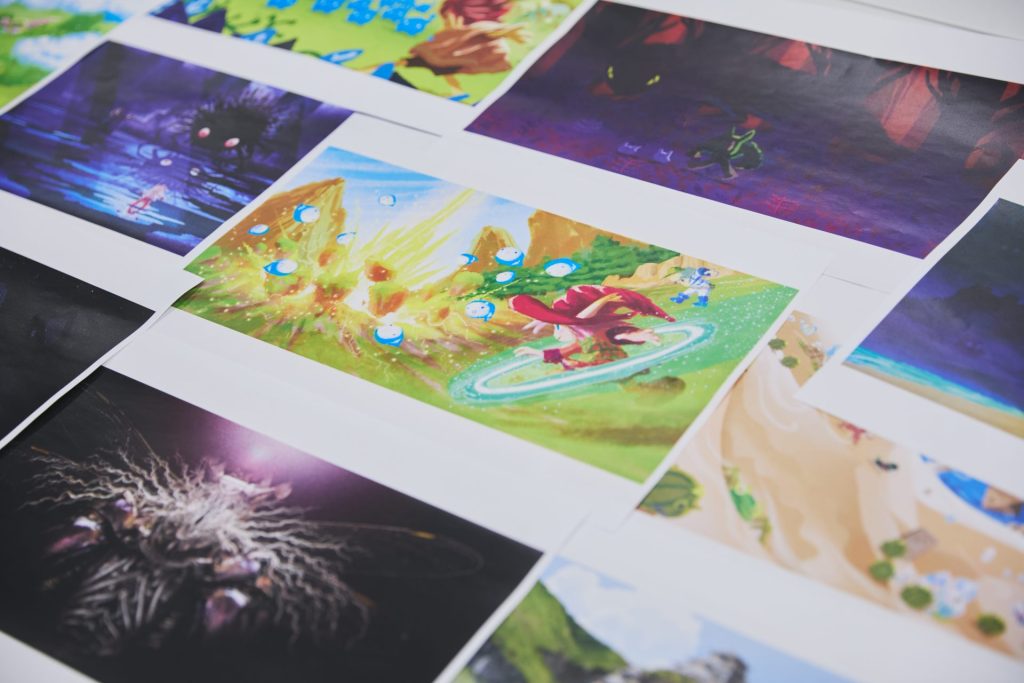
Since joining the company, I have been juggling several jobs, working on concept design and storytelling, as well as new title launches. Sometimes, I’ve started out from a concept no more detailed than, “Comical. Four-player game. Cute.” At times like that, it’s important, in a sense, to just dash off whatever comes to mind. For example, I have been saving up my drawings and settings, almost like a hobby. Then I sometimes have the planners and staff look at them, and this has sometimes led to productions. The process by which a new title takes shape step by step from zero is the most enjoyable thing of all. This never changes no matter how many times I experience it.

Atmospherics are what I value most when drawing a picture. Say, for example, you get an order to, “Make a scary picture.” If you just draw a picture and make it look scary, that’s something anybody can do. But to make it a truly worthwhile picture, you need to consider the emptiness, the loneliness, the sadness, and despair that underly the “scary” feeling for each character, and you have to add enough information. This is what I mean by “atmospherics,” and whether or not a picture has it makes a quantum difference in its impact.

I also always try to question my own work, no matter how super-cool it seems to me. I ask the director and staff for their opinions, so I don’t get self-satisfied. This is because by getting third-party opinions, I think I can arrive at a place where it will please the greatest common denominator of people. If you count from my previous jobs, I’ve been designing and illustrating games for a really long time. As for myself, though, I still have a long way to go. I think you have to always be striving to elevate yourself.

At Deluxe Games, there are no barriers between job types

You can tell them you want to do what you want to do

Experienced game developers from various industries come together at Deluxe Games, so I think it’s a stimulating place to broaden your horizons. And besides, we regularly solicit projects from within the company, so there are plenty of opportunities to freely make proposals. There are no limitations imposed on you just because you’re working in planning or in design, so I think this is an environment where you can communicate what you want to do without any barriers. I’m not comfortable around people who speak harshly, so I consciously try not to be rude when I communicate. However, I never want to compromise on our work, so I’m hoping to bring in people who can engage proactively in discussions for the sake of creating works that people can enjoy. It will be great if we can all work together as one unified creator.